SEC’s Broader Reg NMS Overhaul Could Delay Access Fee, Tick Sizes
June 10, 2026 | By: Ivy Schmerken
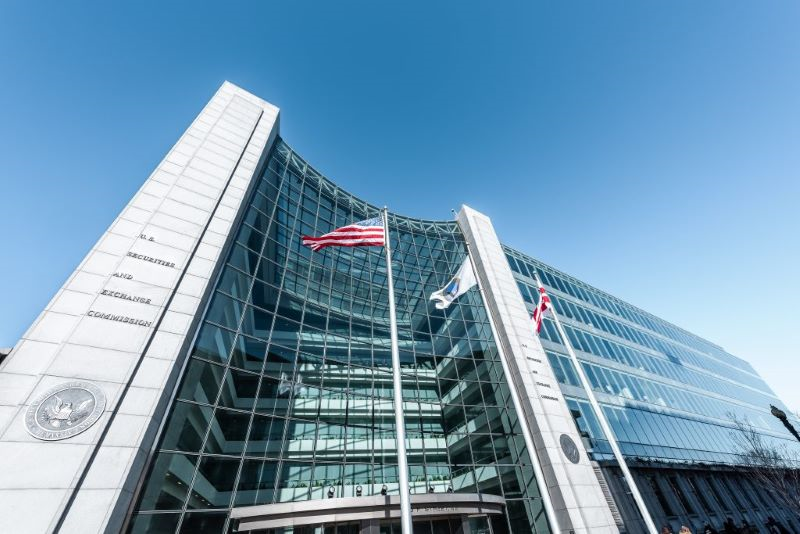
Efforts to implement the revised rules on access fee caps and tick-size increments that drive US equity trading could face delays as the SEC considers more radical changes to Regulation NMS, according to market participants.
With less than six months left until the November 2 compliance date for the amended tick-size and access-fee rules, attention has shifted to the Order Protection Rule (Rule 611), also known as the trade-through rule.
The SEC voted unanimously on June 11 to propose amendments for the recission of Rule 611, known as the trade-through rule (Rule 611) and Rule 610 (e) which contains restrictions on locking and crossing quotations in national market system (NMS) stocks. The industry, academics, and investors will have a 60-day comment period to weigh in.
Rule 611 require brokers to route orders to seek the best available price in the marketplace. The rule also prevents exchanges, alternative trading systems, and wholesale market makers from ignoring a better price at another protected venue.
SEC Chair Paul Atkins – who voted against the rule twenty years ago when he was on the Commission – said: “It is high time to address the rule’s unintended consequences.” At the public meeting, SEC officials also said Rule 611 and 610(e) drove up connectivity and market data costs, created market complexity, and was no longer necessary in today’s highly interconnected and automated marketplace.
Market participants suggest that the focus on the Order Protection Rule could stall the implementation of the other reforms.
“The expectation that I’m hearing is that the tick-size and access-fee changes may be delayed indefinitely while they make their OPR proposal and see the direction that goes with the comment and review of that proposal,” said Adam Cohn, Vice President and Head of Trading Operations at TradeStation Securities, whose clients are retail investors.
Interdependence Raises Concerns
The order protection rule interacts with Rule 610, which allows exchanges to charge fees to access their protected quotes, and Rule 612 which sets the minimum price increment for quotes and trades.
The amended rules, approved in September 2024, would lower access fees from $0.003 or 30 mils to $0.001 or 10 mils. While the prior SEC approved rules after a two-year rulemaking process and withstood litigation, the rules remain contentious.
In a filing, MEMX LLC requested temporary exemptive relief from the November compliance dates for the exchange access fees for an unspecified period, arguing that the SEC needs more time to consider potential changes to Rule 611. The SEC published MEMX’s proposal to obtain industry feedback.
Debate on 611 at Hearing
The topic surfaced at a House hearing on Reg NMS in May, in which lawmakers questioned experts from academia, market making, exchanges and brokerage on whether it makes sense to proceed with the current reforms while 611 is pending.
Joseph Saluzzi, managing partner of Themis Trading, an institutional agency broker, speaking on the House Financial Services Subcommittee on Capital Markets hearing, pushed back on delaying implementation.
“The industry already debated this issue. The SEC already approved the access fee reduction. The DC Circuit Court of Appeals upheld the reduction in these fees against these exchange lawsuits. There should be no further delays,” said Saluzzi. “The amendment must go into effect in November.”
Timing is Everything
“A lot of the conversation is still centered around timing and how interconnected the changes are,” said Lisa Saaks, president of Trillium Surveyor, a provider of trade surveillance and best execution software. “Firms generally view the tick size and access fee rules together since changes to quoting increments can directly affect spreads, routing behavior, and execution economics,” said Saacks.
The SEC granted one-year extension from its original compliance date of November 2025 to November 2026 to give firms more time to prepare their systems.
“The earlier extension already showed how complex these changes are from both an operational and market structure standpoint. But with the SEC having already adjusted the timelines and taken additional steps earlier this year, it still feels like the process is moving forward rather than toward another major delay,” said Saacks.
Risk of Further Delay
Khody Azmoon, CEO and founder of BLOX Markets, said he believes SEC is likely to delay implementation of the Tick Size and Access Fee reforms for another year, pushing the date to November 2027. “Another one-year delay would provide regulatory certainty while giving the Commission sufficient time to evaluate the rules and consider potential modifications. However, extending the timeline beyond November 2027—particularly given that two current commissioners voted in favor of the reforms—would likely raise questions about the appropriateness of delaying a finalized rulemaking indefinitely.”
Redundant Systems Changes
Operational considerations are also weighing on the debate.
Brokers, exchanges, market data vendors and OMS providers will need to prepare for systems changes. At the STANY conference in April, an exchange panelist said if the rules are implemented in November, firms may need to remove code and reprogram their systems again if regulators shift direction with changes to 611.
At the House hearing on May 20, Matt Billings, president of Robinhood Brokerage & Financial Services, said he wants “changes to 611 and delay the rules for 610 and 611 so firms don’t have to change their systems twice.”
Pros and Cons to Tick Size/Access Fees
Beyond timing, market participants suggest that lower access fees and narrower tick sizes would reduce trading costs, but they are aware of trade-offs.
“It’s going to narrow the spreads of tick-constrained stocks. It means the highly liquid stocks with spreads near a penny will be moving to $0.005 or half penny,” said Anthony Melillo, Senior Vice President, Client Services – Flex OMS at FlexTrade Systems.
“Retail investors and liquidity takers will benefit the most from lower explicit trading costs. Stocks will trade more efficiently as tighter spreads bring prices closer to their true economic levels,” he added.
“There are certainly a handful of names that would probably better trade at half cent wide markets,” said Cohn of TradeStation. He agreed the original proposal was too broad, “but now with the newer guideline, it makes more sense. It’s probably better for [retail] clients [to have] more accurate pricing on those symbols,” he said.
But those gains for investors can turn into trade-offs for market makers.
“Half-penny ticks compress quoted spreads and will reduce their profitability, leading to less incentive to display size,” Melillo warned. “That could lead to actually thinner displayed liquidity,” Melillo said. “The simultaneous reduction of the access fee cap to 10 mils further compresses the exchange and liquidity provider revenues,” he noted.
The industry is also keeping an eye on secondary effects from lower fee caps.
With less incentive “to post out loud,” Melillo said they could post liquidity on hidden venues.
Divergent Views on Access Fees and OPR
The debate over access fees exposed a philosophical divide over the utility of the order protection rule versus those who want it scrapped.
Critics of the access fees likened them to the government setting price controls, arguing that competitive forces should determine the right levels.
Exchanges have argued that a reduction in displayed liquidity could weaken the national best bid and offer (NBBO) and undermine trust in the US equity market.
Kevin Kennedy, Executive Vice President, Nasdaq North American Market Services, discussed the interplay of the rules. “The reason 610 exists is because of 611. It all comes back to price discovery and we need liquidity. We’d like to remove the access fee cap. Then we can compete with rebates.”
Others blamed market fragmentation on Rule 611, arguing it has caused the proliferation of venues with minimal volumes and connectivity costs. Robinhood’s Billings noted there are 17 exchanges including 10 protected venues that have less than 2 % market share – questioning the artificial limitations of Rule 611.
Others said that removing 611 was not the answer, suggesting remedies to fix it.
Instead of removing Rule 611, Saluzzi suggested three fixes: modify the quote and trade revenue formula, remove protected quote status from exchanges that had less than 2 % market share, and add depth of book to the order protection rule, allowing institutional brokers to access more hidden liquidity on exchanges.
Saluzzi again urged lawmakers to move ahead with lowering access fees. “Access fees are about 30 mil now, while take fees around 27 or 28 mil, so the spread capture is about 2 mils,” he noted. Lowering access fees to 10 mils would allow exchanges to bring the take fee down to 7 or 8 mils. This would reduce costs for institutional investors and still allow exchanges to maintain their economics, he said.
Rethinking Tick Sizes
Not all experts are convinced that regulatory order protections are necessary any longer.
Robert Battalio, a professor of finance at the University of Notre Dame, said he was skeptical of the need for tick-size changes.
“Rather, the market should post quotes that are net of access fees and the cap on access fees should be eliminated,” Battalio said. “This would allow the market to determine the optimal tick size for a stock.”
Meanwhile, others suggest adding guard rails around the tick-size changes to avoid unintended consequences. “One remedy is to put volume parameters around the stocks that qualify for half-penny ticks,” Melillo said. They could require a displayed depth at the NBBO that is greater than 1,000 shares, as a secondary criterion, he suggested.
Retail Investors and the Market Overhaul
TradeStation’s Cohn said he has concerns about the negative impact of changes on retail investors. “The OPR changes are a much bigger disruptor than the tick size-changes,” he said.
“Changing tick size is understandable; everybody understands what the outcome of that will be. But removing the order protection rule is extremely disruptive. It’s a completely different market structure,” said Cohn.
He also questioned whether tick-size reforms would make sense without the OPR.
“The whole point of the tick-size rule is to set the threshold for the minimum order tick so you can’t cross the market. But if you’re eliminating order protection and allowing trade-throughs, then the tick size becomes less relevant.”
As the SEC prepares to weigh in on consequential changes to Rule 611, the fate of the access-fee and tick size rules are uncertain. The meeting will determine whether the OPR proposal will include the access fee and tick size rules or whether the timing will slip again.
[Editor’s note: After the open meeting, the SEC extended the temporary exemptive relief for implementing the access-fee and tick-size rules until November of 2027. The SEC directed staff to review Rules 610(c) and 612 before end of year, including whether potential changes may be appropriate.]